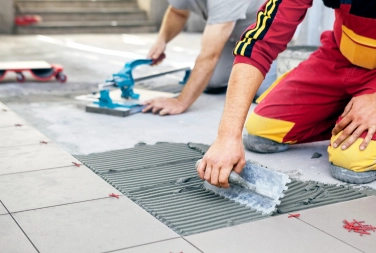
Imagine walking barefoot in your home, and suddenly you hear a sound from your tiles. It will be like a dull, hollow thud beneath your step. You won’t heat it just once. The hollow sound will start coming from everywhere, time and again. This disturbing echo is what constructors and surveyors refer to as drummy tiles. Drummy tile repair in Perth is a major concern for most homeowners. This guide will talk about the causes behind this issue and the fixes available.
What Are Drummy Tiles?
“Drummy” is a building industry term to refer to tiles that have detached from the material beneath them, leaving a hollow area that creates a drum-like sound when tapped or stepped upon. The tile itself might not be broken, and the adhesive bed and the grout may be fine, but the connection between the tile and the adhesive bed is not standing. Drummy tiles can occur on floors, walls, alfresco areas, pool surrounds, and bathroom surfaces.
Double-masonry construction dominates Perth areas. So, the primary causes of drummy tiles tend to differ slightly from other Australian states. The contributing factors are mostly workmanship problems and thermal movement.
Why Do Tiles Sound Hollow? The 7 Causes of Drummy Tiles in Perth
Drummy tiles do not occur out of nowhere. There’s always a cause. In Perth conditions, several factors serve as hollow tiles causes.
1. Insufficient Adhesive Coverage
Tiles need nearly complete coverage of adhesive on their back side. Applying an insufficient amount of adhesive leaves spaces under the tile. Such gaps are not visible while installing, but they show up over time.
Back-buttering involves applying adhesive on the back of the tile and then laying it. One of the most frequent mistakes in installation observed in the Perth checks is failure to do so, particularly with large-format tiles. In its absence, the tile will never bond correctly, resulting in hollow spots.
2. Poor Substrate Preparation
A tile is only as strong as what lies beneath it. If the concrete slab was not fully cured, or if dust, debris, or moisture remained on the surface, the adhesive bonds to contamination rather than the slab itself.
In Perth’s fast-paced construction environment, slabs are sometimes tiled too early. This is a common issue that is noted by Perth tilers, especially when dealing with new construction, where time is of the essence.
3. Adhesive Skinning (The Timed Error)
Tile adhesive has a limited open time. When a tiler applies too much loose floor tile repair adhesive at a time and postpones the laying of tiles, the surface starts to dry and form a skin.
This skinned adhesive does not bond tiles. The outcome is nearly hollow-sounding tiles, although all might appear to be correctly in place.
4. Perth’s Extreme Summer Heat and Thermal Expansion
The summers in Perth are often over 40°C, and tiled surfaces outside the house consume heat. This is one of the major reasons people need loose tile repairing in Perth.
The rates of expansion and contraction of tiles and their substrates are different. In the absence of adequate provisions to accommodate this movement, pressure develops under the surface. This, over time, lifts, separates or delaminates tiles, producing that hollow sound.
The climate of Perth, which is Mediterranean in nature with strong seasonal variations, renders the thermal movement as one of the most important factors contributing to drummy tiles in the area.
5. Missing or Inadequate Expansion Joints
Expansion joints are used as pressure reliefs in tiles. Without them, there is no place to move.
Expansion joints are either not present or spaced inadequately in most Perth alfresco areas and pool surrounds that have been installed by unlicensed people. The consequence is this stress in the tile system, which causes uplifting, cracking, or empty spaces under the surface. This leads to calling loose tile repairing services frequently.
6. Moisture Intrusion
Water is a silent disruptor. Failed waterproofing or improper drainage weakens the adhesive bond over time and creates the need for frequent drummy tile repairs.
The winter rains in Perth have the potential to flood the outdoor tiled surfaces where there is poor drainage. In bathrooms, the leaked membranes cause water to leak under tiles. This is the one category of drummy tiles that may point to a deeper structural issue, often noted in inspections aligned with REIWA standards.
7. Structural Movement and Tile-Over-Tile Jobs
All buildings move. Seasonal soil changes, nearby construction, or tree roots can shift structures slightly, enough to break adhesive bonds.
Typical tiles restoration in Perth kitchens and bathrooms has the potential to perpetuate existing problems. In case the existing tiles were drummy, the next layer will end up having the same issue.
How to Check for Drummy Tiles Yourself — The Tap Test
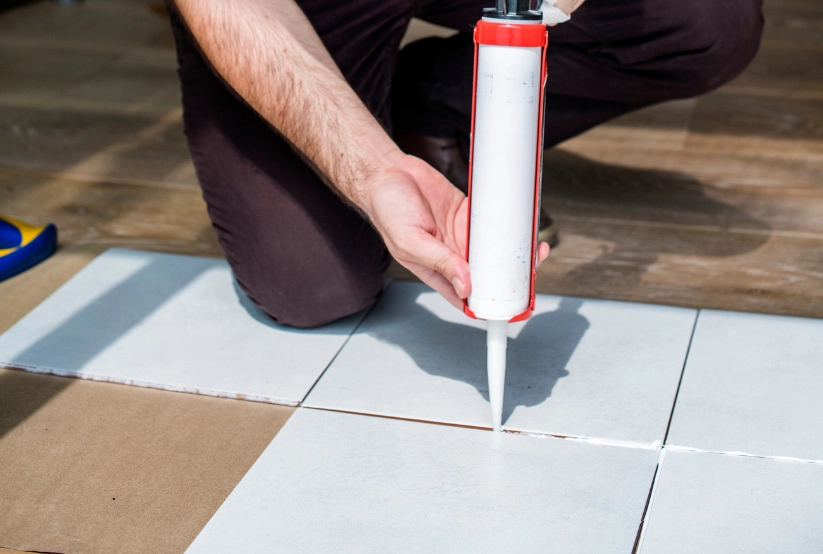
Before you learn how to fix drummy tiles, you need to know how to identify them. It does not require special equipment to detect drummy tiles. A tap test can tell a lot.
What You Need
A solid object, like a screwdriver handle, a golf ball, or a rubber mallet, will be ideal.
Step-by-Step
- Begin at one end of the tiled surface, and proceed methodically over it. Tap each tile firmly, including the centre and all four corners.
- Listen carefully. A good tile will give a thick and crisp sound. A drummy tile produces an echo-like sound.
- Mark any suspect tiles with chalk or masking tape as you go. When finished, evaluate the diffusion. When the percentage of the wall and floor tiling area that sounds hollow is greater than 20 to 30%, it is prudent to consult with professionals.
Practical Perth Tip
The same is also done by professional inspectors. But they are often equipped with chain-dragging tools or sounding hammers for better assessment. They might also use thermal imaging and moisture meters to examine further.
When buying property in Perth, make sure that they do a tile tap test. It is an easy process that can expose underlying problems prior to settlement.
How to Fix Drummy Tiles in Perth — Your 3 Options
Drummy tiles may be effectively repaired once they are identified. Those wondering how to fix drummy floor tiles will come across multiple solutions. The appropriate solution is dependent on the scale and the cause of the problem.
Option 1 — Tile Injection (Best for Intact Tiles)
The most cost-effective solution for hollow tiles repair is tile injection. It is also the least invasive. A technician drills small holes in the grout lines and injects a specialised adhesive under the tile.
This seals the gap and again cements the tile to the substrate. The glue usually dries in several hours, which enables its utilisation on the same day.
The best tiling contractors in Perth use this technique in houses, where large-format tiles are gaining popularity and replacement matches may be hard to find.
Option 2 — Lift, Clean and Re-Lay (Best for Small Areas)
In the case of damaged tiles or adhesive failure to a large degree, lifting and re-laying is the choice.
Drummy tiles repairing contractors do this by taking the tile off, thoroughly cleaning away old adhesive from both surfaces, preparing the substrate appropriately and re-installing it with proper coverage and back-buttering.
Option 3 — Full Retile (Best for Widespread Damage)
A full retile can be required when a significant percentage of the region is covered, or when water or construction problems are of concern.
This involves the removal of the already existing tiles, repairing or replacing the substrate, applying waterproofing which is compliant, and re-laying the tiles using appropriate methods.
Waterproofing of wet areas in Western Australia should be done by licensed professionals under the jurisdiction of the WA Building Commission. The loose tiles Perth repair cost will be higher when a significant area needs to be fixed.
How to Prevent Drummy Tiles in Future — 5 Things to Insist On
If you are building or renovating in Perth, prevention is far easier than repair.
- Insist on full adhesive coverage with back-buttering, especially for large-format tiles
- Confirm the concrete slab has fully cured before tiling begins
- Ensure expansion joints are correctly installed in all large, outdoor, and wet areas
- Use a licensed Perth tiler and verify credentials through the WA Building Commission
- Arrange a practical completion inspection that includes a tile tap test
These simple steps can prevent one of the most common and costly tile defects.
FAQs
Why do tiles sound hollow or “drummy”?
Tiles sound hollow (also called drummy tiles) when there is poor adhesion between the tile and the substrate. This usually happens due to air gaps, improper adhesive application, or uneven surfaces, causing a hollow echo when tapped.
What causes drummy tiles in Perth homes?
Common causes include poor tiling installation, insufficient adhesive coverage, moisture issues, temperature changes, and substrate movement. Perth’s climate, especially heat and expansion, can worsen these issues if tiles are not installed correctly.
How can I check if my tiles are hollow?
You can tap the tiles lightly with a coin or knuckle. A solid tile sounds firm, while a hollow tile produces a drummy or echo-like sound. Professional inspections provide more accurate results for larger areas.
Can hollow tiles be repaired without removing them?
In some cases, yes. Small areas can be fixed using tile injection methods, where adhesive is injected under the tile. However, severely affected tiles often require removal and reinstallation for a long-lasting solution.
How much does it cost to fix drummy tiles in Perth?
Costs depend on the extent of damage and repair method. Minor fixes are relatively affordable, while larger areas requiring retiling may cost more. Getting a professional assessment ensures accurate pricing and effective solutions.
How do professionals fix hollow or drummy tiles?
Experts identify the affected tiles, remove them if necessary, prepare the surface, and reinstall using proper adhesive techniques. This ensures full bonding, durability, and long-term performance.
How can I prevent tiles from becoming hollow in the future?
Prevention includes proper surface preparation, full adhesive coverage, using quality materials, and hiring experienced tilers. Ensuring correct installation is the best way to avoid drummy tiles.
Conclusion
Drummy tiles are amongst the most common, yet also the least understood problem in Perth. This hollow sound is more than just an aesthetic problem. It indicates a faulty bond that could deteriorate further. Fortunately, the majority of issues can be easily remedied by using the correct methods. At Boda Tiling, we provide expert services in diagnosing and repairing drummy tiles in Perth homes, along with tiles regrouting services. Our services include professional assessments and recommendations based on experience, providing you with realistic options. Contact us today for a free quotation to solve your problem before it becomes more serious.